
In part one I went over tileGen.py, the Maya tool behind the station's floors and walls. This part is the textures, which come out of a second tool, scifi_tilegen.py, first checked in late on June 27th alongside tileGen's second version. It's plain Python that only needs Pillow, and its notes say it's after a flat Synty style sci-fi look, flat fills, hard edges, crisp panel lines and no baked lighting. There's one palette at the top of the file, the "single source of truth -- edit to recolour everything", with 15 colours and five accents (teal, amber, blue, hazard yellow and red) plus brighter versions of those for the glow.
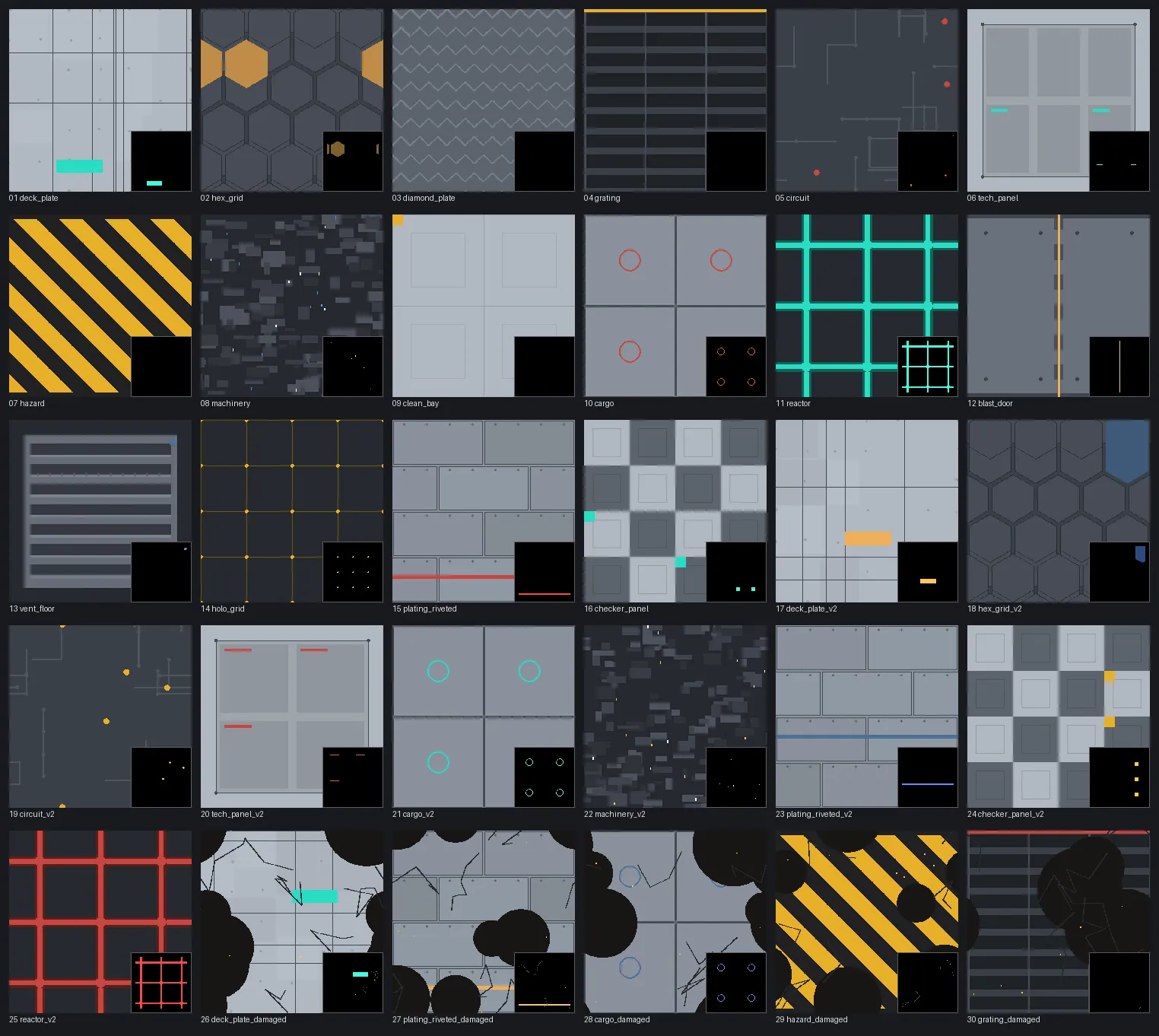
It has 16 floor presets, 8 wall styles, plus corners and doors, and every texture comes out as a pair, the colour map and a matching glow map painted in the same pass from the same seed, so the glow always lines up. Run it with --gallery 30 and you get every floor preset once, then some extra variants, then five damaged ones, all on a contact sheet like this. The 130 textures that went into the game that evening (floors, walls and corners, each with its glow map) all came out of it.
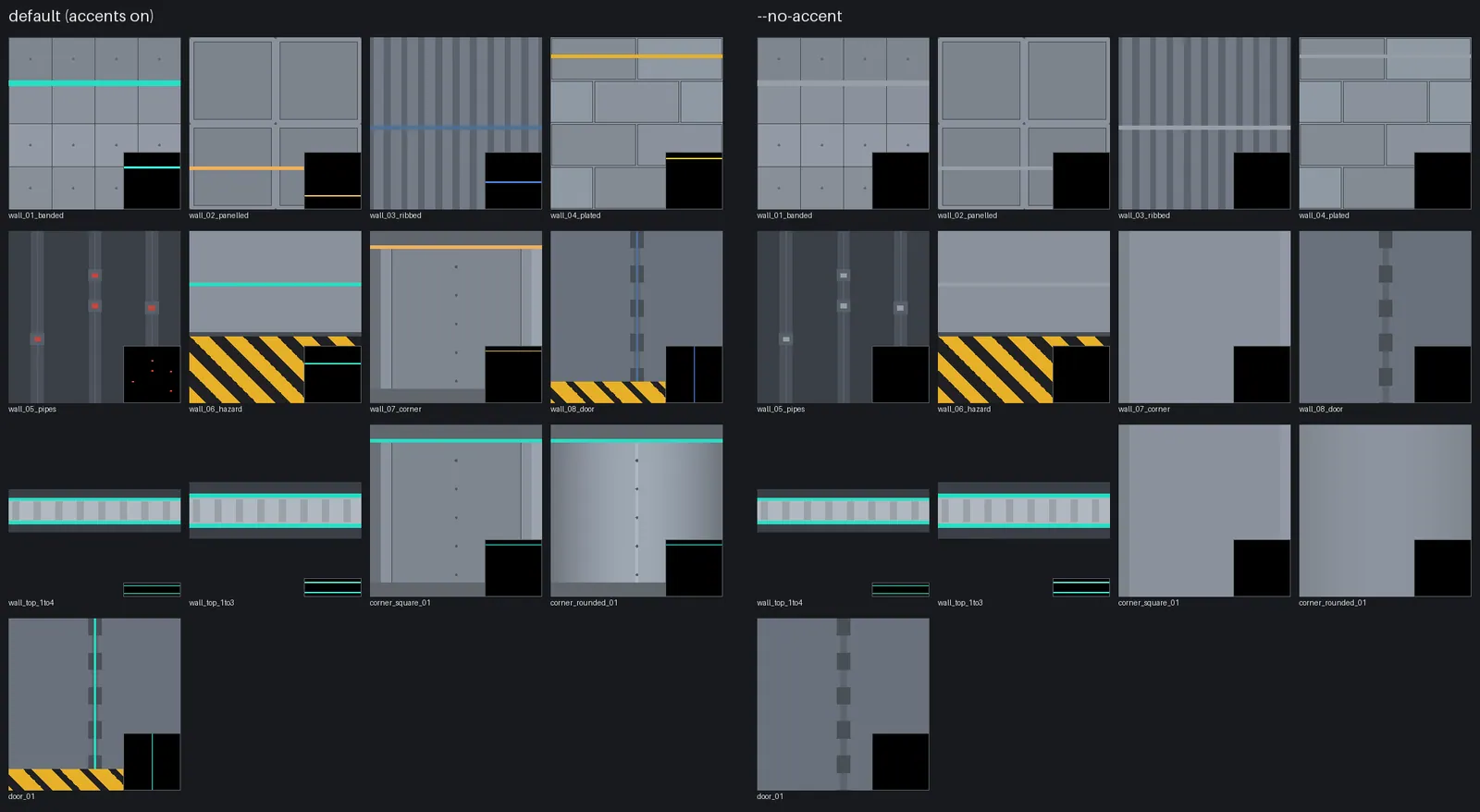
The next morning, right after the wall top fix from part one, it was the corners. A flat texture can't line a straight glowing trim up with a curved corner (the generator's reference guide says as much), so --no-accent went in, which takes the glowing trim off the walls and corners so a rounded corner just reads as part of the wall, and that afternoon the walls and corners in the game got swapped for the --no-accent versions. The doors got the same treatment the following afternoon, losing their caution strip and hazard stripes, straight after the door saga from part one. The hazard wall style keeps its stripes though, since they're the whole style rather than an accent.
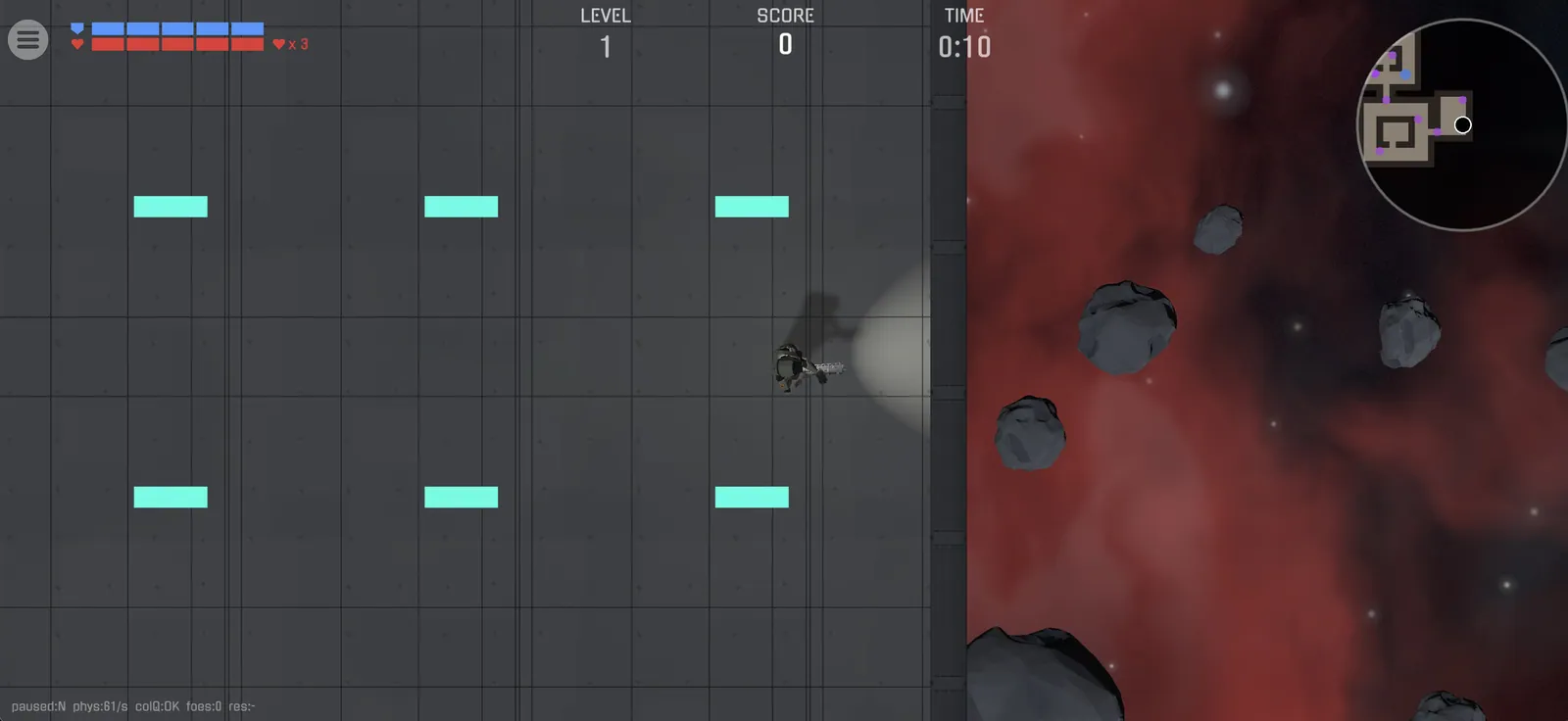
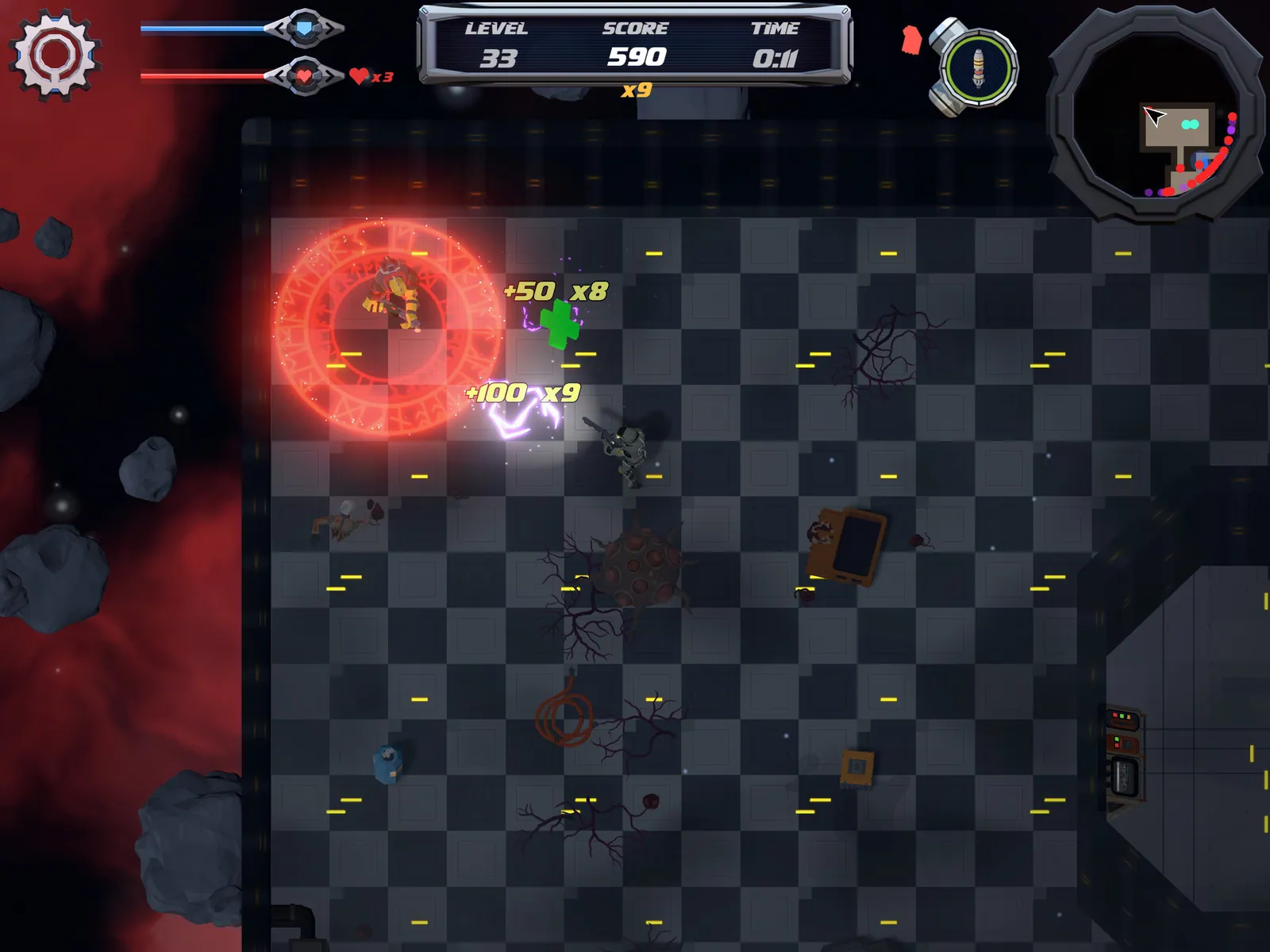
Here's deck 1 on the first generated floor on the morning of June 28th, teal bars and all, with the red nebula past the wall. The floor glow got switched off later that day because it was coming out as "harsh yellow seam lines", then back on half an hour later so the accent lines light up in the dark, with a corner glow added for Blackout.
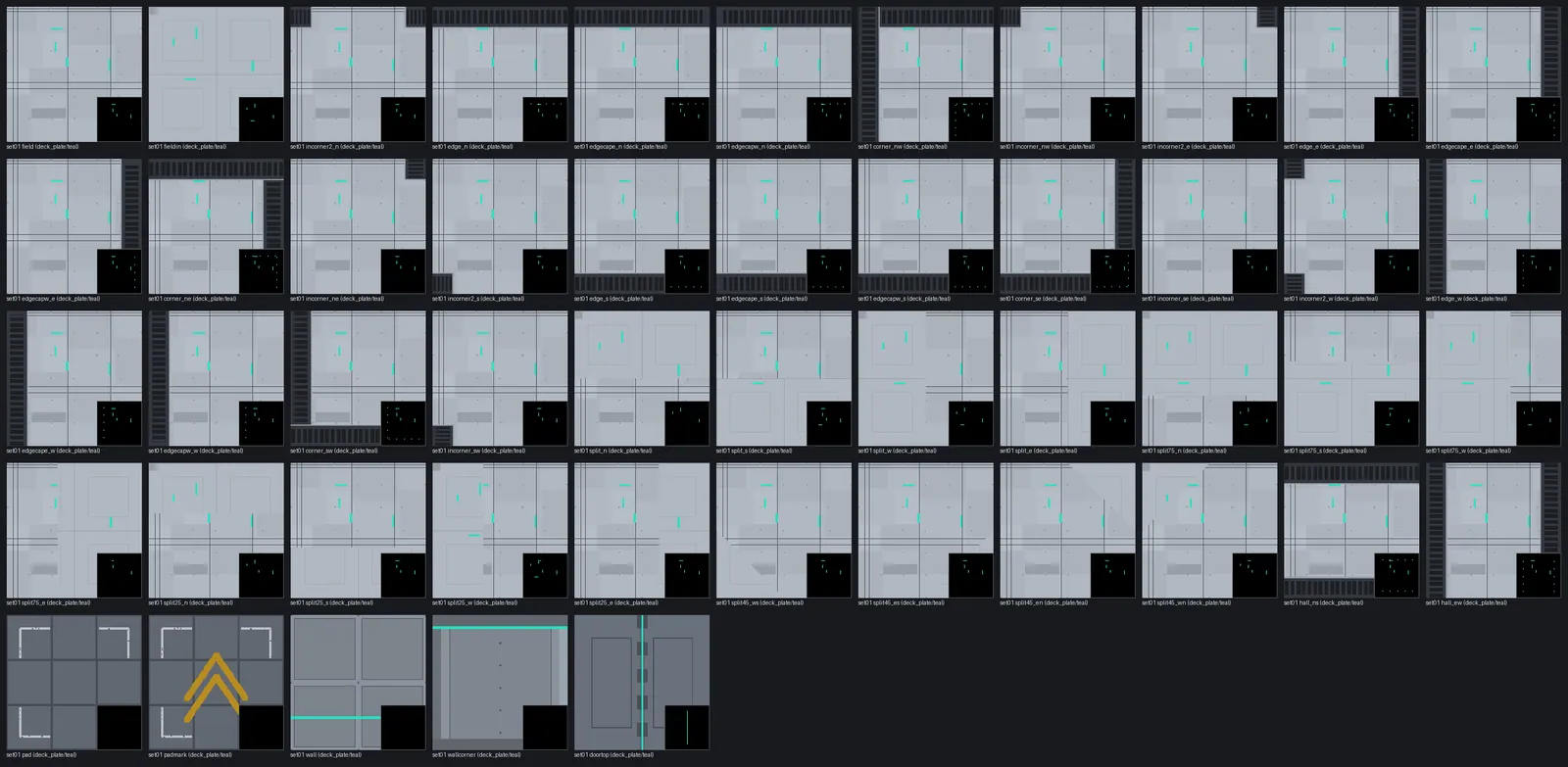
Then on July 3rd, the day after the interior kit, the generator got --floor-sets, which is what's in the game now. Each set is a room family, one base pattern painted 46 ways (the plain floor, grate bands, edges and corners, hallway strips, pads, and "split" tiles that change pattern under an interior wall) plus a matching wall, wall corner and door top, so 49 textures a set and 10 sets. They're painted already facing each way, because the rule by then was "never rotate floor tiles in-engine", and the glow maps are saved at half size. Decks 1 to 30 go through the 10 sets in order, after that each deck picks one at random, and the inner rooms use the same set as the rest of the deck, since "a different interior set read as a mess".
The floor sets also brought in the emissive edge rule, no glow within 8% of a tile's edge, because "edge glow leaked under walls = flicker". The grating floor had already been pulled from the first pool for that very reason, along with the banded wall ("didn't read well on level 1") and the hazard walls, whose "caution stripes read as noise on the thin interior walls".
The grate bands were their own little saga. Getting them to wrap round the edges and corners of rooms took "~6 corner-wrap attempts", and on July 4th I made the call to "drop them, only use them in vertical + horizontal hallways". The catch was that every set still had all those edge and corner textures in it. When a room gallery tool came along in September (275 rooms built from the kit through the real level code, each with a map of which floor texture every cell picked), it showed the kit only ever picks 20 of the 46 floor textures in a set, so the optimisation pass later that month left the 480 files the level builder never asks for out of every export.
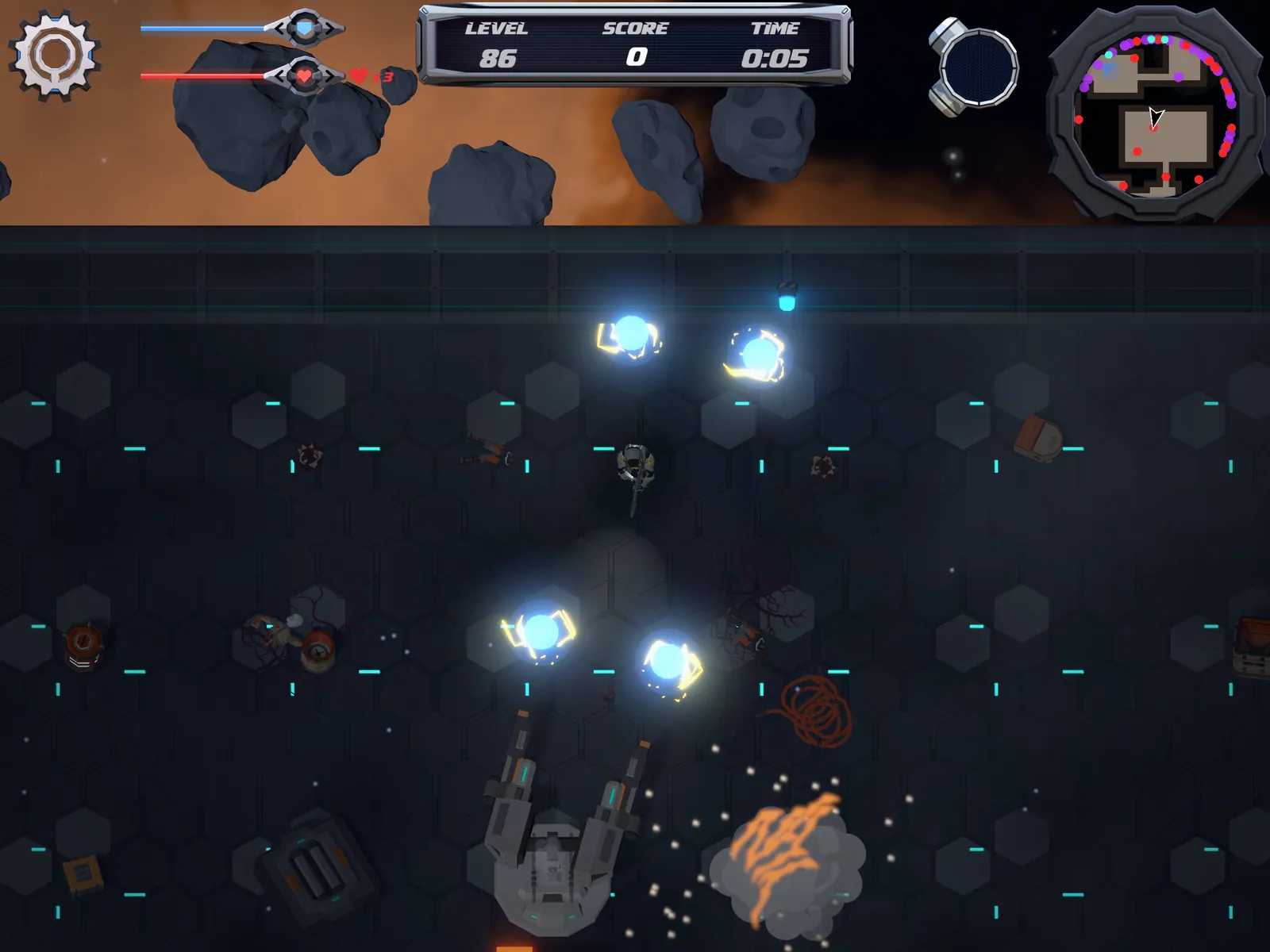
One nice thing turned up while pulling this post together. Everything in the game came from seed 0, and it all regenerates exactly. The June 27th version of the generator, run with the reference guide's own settings and seed 0, remakes all 154 textures of that first run pixel for pixel, the walls and corners that replaced them are the next morning's --no-accent version on seed 0, and all 985 files in the floor sets come straight out of today's version with --floor-sets 10 --seed 0. So if a texture ever goes missing, it's one command away!
So that's where the station stands. The texture generator went from 967 lines to 1,543 in four versions, tileGen.py from 988 to 2,111 in six, and the game runs on 15 OBJs out of Maya and those 10 floor sets. On July 12th both tools moved out of the game project into their own Tools stream in Perforce (the first tool in there), with the two gallery runs from June and July kept alongside to browse.
Next up on the behind the scenes side is the stuff I bought rather than built, and why. Keep an eye on the dev log!